
Are you prepared to delve into a world of captivating symbolism and mesmerizing hues? Let’s explore the captivating mystery of the vivid indigo color.
Indigo is a color that commands attention due to its limitless variety of shades and magical combinations. Learn the mythical meanings behind this color, unleash your imagination, and allow the indigo to mesmerize your senses.
Prepare to set out on a journey that will inspire you and leave you wanting more. Greetings from the world of indigo!
What is Indigo Color?
Indigo is a deep, rich color between blue and violet on the visible light spectrum. Its name derives from the Greek word “indikon,” meaning “from India,” as the dye used to create this color was traditionally obtained from Indian plants. Indigo has a fascinating history and a complex chemical composition.
Indigo was first used as a dye thousands of years ago. The first people to cultivate indigo plants and use them for fabric dyeing were ancient civilizations like Egypt and India.
To make a dye for textiles, the pigment from Indigofera tinctoria leaves had to be extracted and fermented.
Chemically speaking, indigo is an indigoid, a blue-violet colorant primarily made of the indole group compound indigotin. Indigotin’s complex structure necessitates numerous chemical processes during its synthesis.
Indigo’s intensity and hue can be affected by things like dyeing methods and fabric types. As a result, different shades are produced by varying the absorption of indigo using methods like vat dyeing and direct application.
Fabric types also play a role, as some materials have varying levels of absorbency or chemical reactions with indigo.
Designers can benefit from indigo’s versatility for visually appealing compositions by utilizing the rules of color theory. The main color code for Indigo is #4B0082, but there are numerous variations, shades, and tints of this color.
The color indigo continues to inspire thanks to its historical roots and contemporary design relevance. It is a popular option for creative endeavors because of its timeless appeal and capacity to evoke depth and richness.
Shades of Indigo Color
Dark Indigo (#1F0954):

This indigo color is dark, enigmatic, and almost black in tone. It exudes a sense of sophistication and elegance, it is also perfect for use in designs to make a dramatic impact. Different color spaces can describe the color #1F0954. For instance, the #1F0954 color RGB value is (31,9,84).
The composition is in the RGB color space with the following values:
- Red: 12%
- Green: 4%
- Blue: 33%
The corresponding values for the CMYK color space are as follows:
- Cyan: 63%
- Magenta: 89%
- Yellow: 0%
- Key (Black): 67%
Deep Indigo (#2b0071):

Deep indigo is a captivating shade that attracts attention due to its intense saturation and depth. It can be used to make a bold and strong visual impact because it gives any design a dash of luxury and depth. Different color spaces can describe the color #2b0071. For instance, the #2b0071 color RGB value is (43,0,113).
The composition is in the RGB color space with the following values:
- Red: 17%
- Green: 0%
- Blue: 44%
The corresponding values for the CMYK color space are as follows:
- Cyan: 62%
- Magenta: 100%
- Yellow: 0%
- Key (Black): 56%
Royal Indigo (#240952):

Royal indigo is a rich, regal shade that oozes opulence and sophistication. It is ideal for designs that call for a subtle touch of opulence because it exudes sophistication and nobility. The color #240952 can be described in different color spaces. For instance, the #240952 color RGB value is (36,9,82).
The composition is in the RGB color space with the following values:
- Red: 14%
- Green: 4%
- Blue: 32%
The corresponding values for the CMYK color space are as follows:
- Cyan: 56%
- Magenta: 89%
- Yellow: 0%
- Key (Black): 68%
Blue-Violet Indigo (#8A2BE2):

This shade of indigo leans more towards violet, infusing a subtle touch of femininity and softness. It offers a harmonious blend of blue and purple, resulting in a dreamy and enchanting hue. The color #8A2BE2 can be described in different color spaces. For instance, the #8A2BE2 color RGB value is (138,43,226).
The composition is in the RGB color space with the following values:
- Red: 54%
- Green: 17%
- Blue: 89%
The corresponding values for the CMYK color space are as follows:
- Cyan: 39%
- Magenta: 81%
- Yellow: 0%
- Key (Black): 11%
Electric Indigo (#6F00FF):

Electric indigo is a striking and vibrant color that draws attention. Its striking luminosity and intense saturation make it a stand-out color option for designs that aim to make a strong statement. Different color spaces can describe the color #6F00FF. For instance, the #6F00FF color RGB value is (111,0,255).
The composition is in the RGB color space with the following values:
- Red: 44%
- Green: 0%
- Blue: 100%
The corresponding values for the CMYK color space are as follows:
- Cyan: 56%
- Magenta: 100%
- Yellow: 0%
- Key (Black): 0%
Indigo Blue (#3F0FB7):

This indigo color has a stronger blue undertone, giving it a deep and rich blue hue. It is adaptable for both calming and impactful designs because it exudes a sense of calmness and depth. Different color spaces can describe the color #3F0FB7. For instance, the #3F0FB7 color RGB value is (63,15,183).
The composition is in the RGB color space with the following values:
- Red: 25%
- Green: 6%
- Blue: 72%
The corresponding values for the CMYK color space are as follows:
- Cyan: 66%
- Magenta: 92%
- Yellow: 0%
- Key (Black): 28%
Indigo Violet (#3E285C):

The beauty of indigo and the vibrancy of violet are combined in the deep, intense shade known as “indigo violet.” It is appropriate for designs that want to convey a hint of artistic flair because it exudes a sense of sophistication and creativity. Different color spaces can describe the color #3E285C. For instance, the #3E285C color RGB value is (62,40,92).
The composition is in the RGB color space with the following values:
- Red: 24%
- Green: 16%
- Blue: 36%
The corresponding values for the CMYK color space are as follows:
- Cyan: 33%
- Magenta: 57%
- Yellow: 0%
- Key (Black): 64%
Indigo Navy (#4C5E87):

A darker shade of indigo with hints of deep blue and black is called indigo navy. It exudes a sense of power and authority, making it a great option for designs that call for a brash and commanding presence. The color #4C5E87 can be described in different color spaces. For instance, the #4C5E87 color RGB value is (76,94,135).
The composition is in the RGB color space with the following values:
- Red: 30%
- Green: 37%
- Blue: 53%
The corresponding values for the CMYK color space are as follows:
- Cyan: 44%
- Magenta: 30%
- Yellow: 0%
- Key (Black): 47%
Light Indigo (#6D5ACF):

Light indigo is a softer, more delicate shade that has a calming effect. It exudes a sense of calm and relaxation, making it ideal for designs that aim to produce a serene atmosphere. Different color spaces can describe the color #6D5ACF. For instance, the #6D5ACF color RGB value is (109,90,207).
The composition is in the RGB color space with the following values:
- Red: 43%
- Green: 35%
- Blue: 81%
The corresponding values for the CMYK color space are as follows:
- Cyan: 47%
- Magenta: 57%
- Yellow: 0%
- Key (Black): 19%
Pale Indigo (#9892B1):

Pale indigo is a muted and subtle shade, evoking a sense of serenity and delicacy. Its understated elegance makes it suitable for designs that require a soft and ethereal touch. Different color spaces can describe the color #9892B1. For instance, the #9892B1 color RGB value is (152,146,177).
The composition is in the RGB color space with the following values:
- Red: 60%
- Green: 57%
- Blue: 69%
The corresponding values for the CMYK color space are as follows:
- Cyan: 14%
- Magenta: 18%
- Yellow: 0%
- Key (Black): 31%
Muted Indigo (#4C367E):

A softer, more muted version of the vibrant indigo hue is offered by muted indigo. It produces a gentle and harmonious aesthetic, making it appropriate for designs that aim to evoke a feeling of understated sophistication and elegance. Different color spaces can describe the color #4C367E. For instance, the #4C367E color RGB value is (76,54,126).
The composition is in the RGB color space with the following values:
- Red: 30%
- Green: 21%
- Blue: 49%
The corresponding values for the CMYK color space are as follows:
- Cyan: 40%
- Magenta: 57%
- Yellow: 0%
- Key (Black): 51%
Smoky Indigo (#38417E):

Smoky indigo is a hazy and delicate shade, reminiscent of the soft glow of smoke. It exudes a sense of subtlety and mystery, making it ideal for designs that aim to create an ethereal and dreamlike atmosphere. Different color spaces can describe the color #38417E. For instance, the #38417E color RGB value is (56,65,126).
The composition is in the RGB color space with the following values:
- Red: 22%
- Green: 25%
- Blue: 49%
The corresponding values for the CMYK color space are as follows:
- Cyan: 56%
- Magenta: 48%
- Yellow: 0%
- Key (Black): 51%
Denim Indigo Color (#2F314E):

Denim Indigo draws inspiration from the color of classic denim fabric. It offers a timeless and versatile shade, suitable for designs that seek to convey a casual yet stylish aesthetic. Different color spaces can describe the color #2F314E. For instance, the #2F314E color RGB value is (47,49,78).
The composition is in the RGB color space with the following values:
- Red: 18%
- Green: 19%
- Blue: 31%
The corresponding values for the CMYK color space are as follows:
- Cyan: 40%
- Magenta: 37%
- Yellow: 0%
- Key (Black): 69%
Washed Indigo (#98AFD3):

Washed indigo has a faded and worn appearance, resembling the effect of aging or sun exposure on indigo-dyed fabrics. It carries a sense of authenticity and nostalgia, making it ideal for designs that aim to evoke a vintage or retro vibe. Different color spaces can describe the color #98AFD3. For instance, the #98AFD3 color RGB value is (152,175,211).
The composition is in the RGB color space with the following values:
- Red: 60%
- Green: 69%
- Blue: 83%
The corresponding values for the CMYK color space are as follows:
- Cyan: 28%
- Magenta: 17%
- Yellow: 0%
- Key (Black): 17%
Indigo Color in Design
When it comes to incorporating indigo into your design, you can mix various tones of this intense blue color to produce a unified and alluring appearance.
To give your design depth and contrast, experiment with lighter and darker shades of indigo. To create this play of shades, you can use textiles, paint, or accessories.
There are a number of colors that go incredibly well with indigo. Earthy hues like sand taupe, warm beige, and olive green give off a feeling of naturalness and grounding.
Copper or gold metallic accents can add a touch of opulence. Additionally, shades of white, grey, and cream look elegant and clean when combined with indigo.
To create a balanced and visually appealing color palette using indigo, consider the following tips:
- Use a variety of shades: To give your palette depth and dimension, use indigo in a variety of tints and shades. A composition with an eye-catching visual quality can be made by blending lighter and darker indigo hues or adding colors that lie near indigo on the color wheel, like mauve color.
- Utilize neutrals: To provide balance and keep the color scheme from becoming too overpowering, pair indigo with neutral hues like white, grey, or beige. Neutrals can act as a background to highlight the vibrancy of indigo.
- Experiment with accent colors: Add subtle splashes of contrasting hues to the design to create excitement. For instance, adding a splash of red or a bright yellow can serve as focal points to highlight particular components.
- Consider the context: Consider the overall tone and subject of your design. Choose hues that fit the desired mood because indigo can evoke feelings of elegance, mystery, and tranquility. Indigo, for instance, looks elegant and opulent when combined with silver or gold tones.
If you follow these tips, you will be able to create an appealing color palette that effectively enhances the beauty of indigo.
Indigo Color Combinations
Complementary Indigo Color Matching
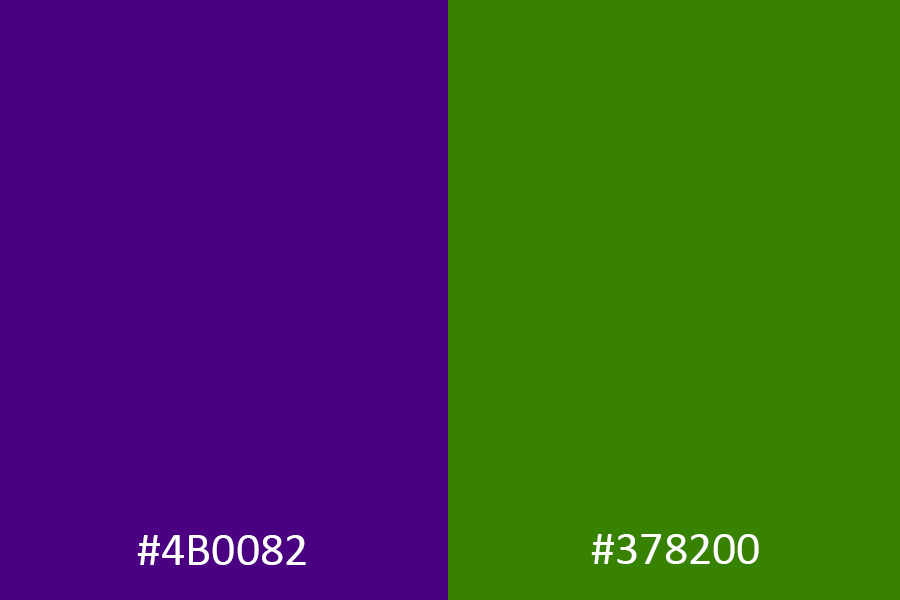
Complementary colors are pairs of colors that, when combined or mixed, cancel each other out. When placed next to each other, they create the most substance contrast for those two colors.
Indigo is a deep, rich color between blue and violet in the spectrum. Therefore, the complementary color of indigo lies opposite to it on the color wheel. Since the color wheel ranges from red to violet, the complementary color of indigo is found in the shades of orange to green. However, Indigo #4b0082 is closer to blue, its complementary color would technically be #378200.
Also, shades of indigo could complement with other colors like:
Indigo and Gold:
Indigo’s richness blends elegantly with the warm luxury of gold, adding opulence and sophistication to any design or space.
Indigo and Copper:
Copper is a metallic shade of orange and creates a stunning and modern contrast with indigo. This combination is often seen in contemporary interior designs and fashion accessories.
Indigo and Mustard Yellow:
Vibrant mustard yellow creates a striking contrast against indigo, making it an excellent choice for adding a pop of color and making a bold statement.
Analogous Indigo Color Matching
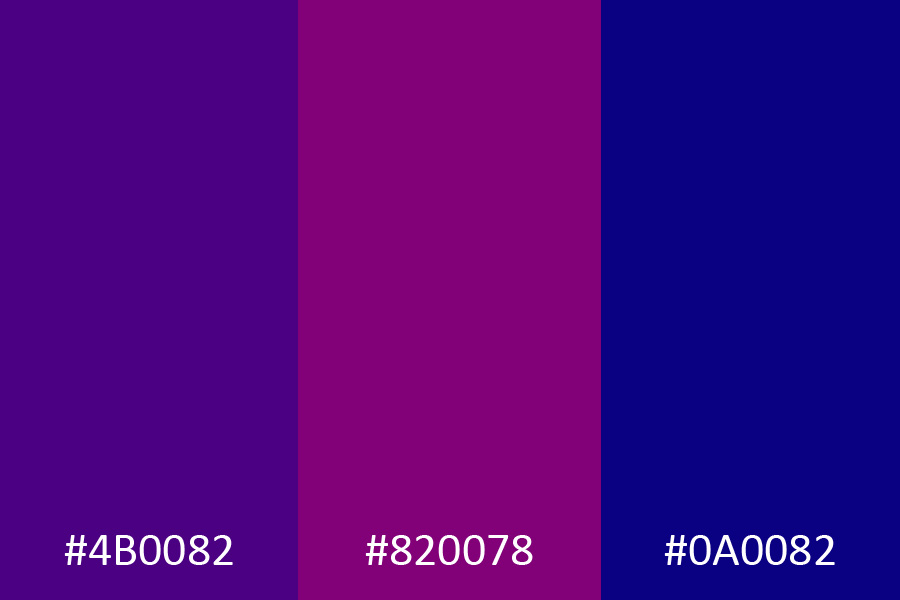
In analogous color matching, colors that are adjacent to indigo on the color wheel are combined. This creates a harmonious and cohesive look.
Indigo (#4B0082), Violet (#820078), and Dark Blue (#0A0082):
This combination is rich and luxurious, making it suitable for formal spaces like dining rooms, living rooms, or offices. The deep and rich tones of indigo and dark blue create a sense of depth and sophistication, while the bright and vibrant tone of violet adds energy and dynamism.
Monochromatic Indigo Color Matching
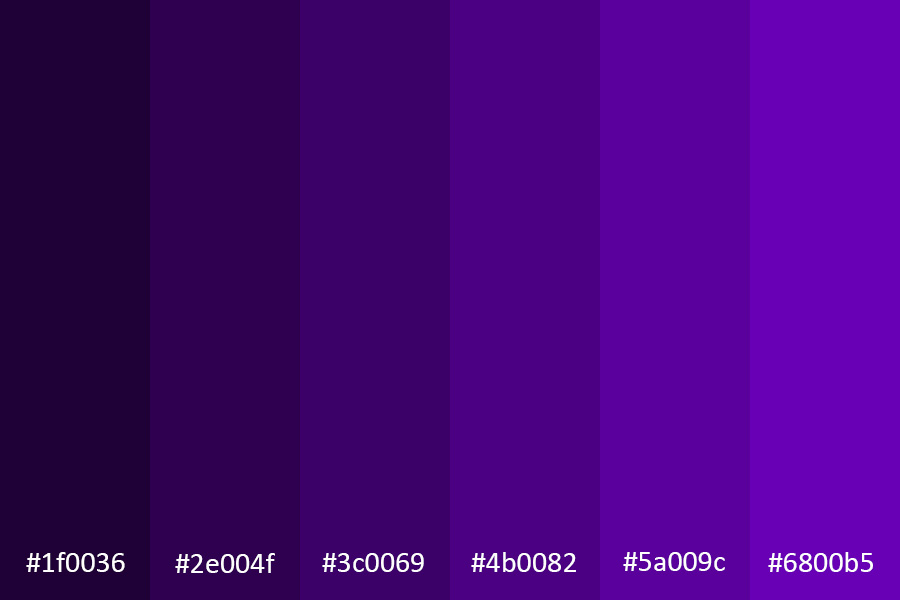
Monochromatic color schemes are made up of different tones, shades, and tints within a specific hue or color. These schemes are harmonious and pleasing to the eyes and are often found in nature. For indigo, a monochromatic color scheme would include various tones, shades, and tints of indigo.
Triadic Indigo Color Matching
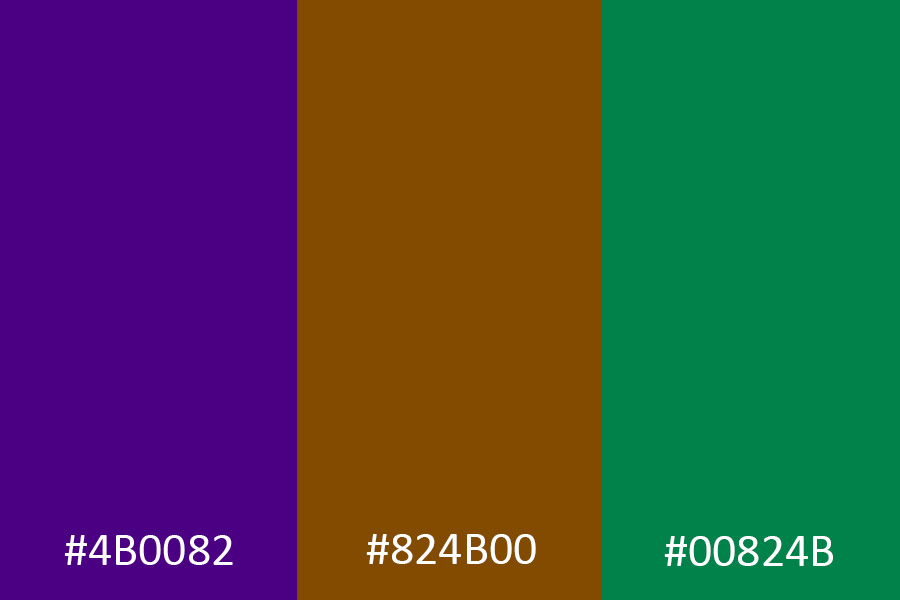
Triadic color matching involves using three colors that are evenly spaced on the color wheel. This scheme is popular among artists because it offers strong visual contrast while retaining balance and color richness. For indigo, a triadic color scheme could involve a few different sets of colors, depending on which complementary pairs you choose. For example:
Indigo (#4B0082), Brown (#824B00), and Teal (#00824B):
These three colors create a balanced and harmonious palette that is suitable for a wide range of applications, from fashion to interior design. The deep and rich tones of indigo and teal create a sense of depth and sophistication, while the warm and earthy tone of brown adds a natural and grounded feel.
Tetradic Indigo Color Matching
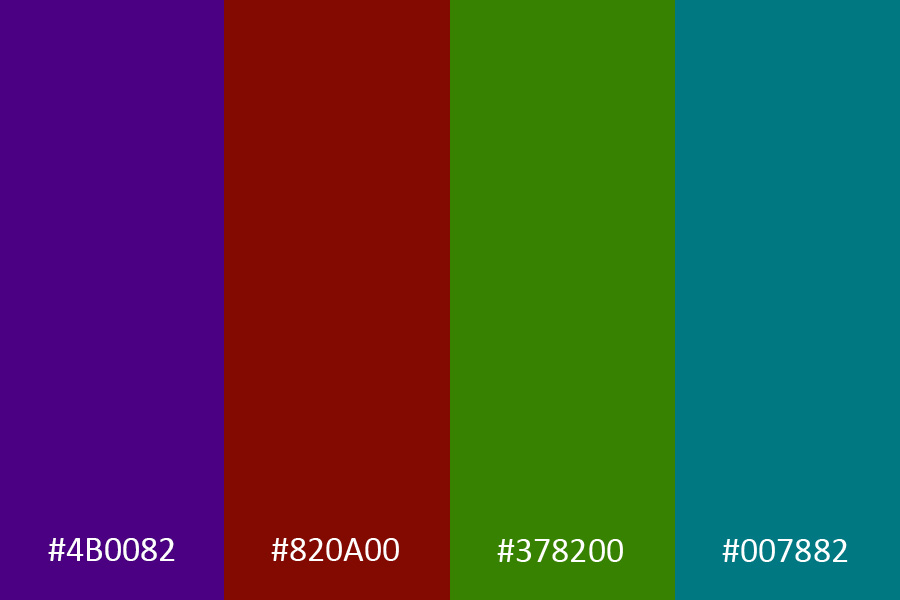
Tetradic color matching involves using four colors that are evenly spaced on the color wheel.
Indigo (#4B0082), Dark Red (#820A00), Green (#378200), and Teal (#007882):
These four colors create a balanced and harmonious palette that is suitable for a wide range of applications, from fashion to interior design. The deep and rich tones of indigo and teal create a sense of depth and sophistication, while the vibrant and lively tones of green and dark red add energy and dynamism.
Indigo vs. blue: What’s the difference and how to use them together?
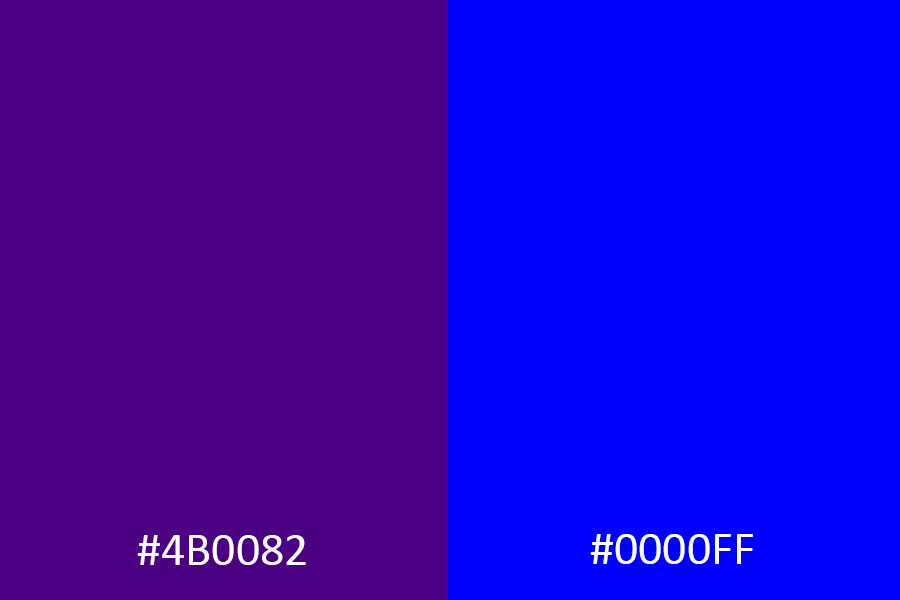
Blue and indigo are two alluring hues that have some things in common as well as their own unique qualities.
Your design projects will benefit from knowing how to combine these colors and how they differ from one another. Indigo and blue have many potential uses, from symbolism to practical ones.
Blue and indigo are frequently used interchangeably, but they differ in a few small ways. The primary color blue is frequently linked to stability, calmness, and peace.
On the other hand, indigo is a dark blue color with a hint of purple. It gives off a mystical, elegant, and reflective vibe.
When combining indigo and blue in design projects, their similarities and differences can be harnessed for a harmonious effect.
Indigo can be used as an accent color to add depth and intrigue to a predominantly blue palette. Conversely, blue can provide a calming influence when paired with the intense richness of indigo. For example, when used in interior design, these hues can produce a relaxed and reflective ambiance in bedrooms or meditation areas.
Also, blue and indigo can be combined to make elegant clothing in the world of fashion.
In short, there are numerous options, from graphic design to home decor. Remember to always consider the context in which the colors will be used and the mood or atmosphere you want to create.
The Symbolism of Indigo in Different Societies and Traditions
In many cultures and traditions, indigo has symbolic meaning. It is a symbol of knowledge, insight, and spiritual enlightenment in many cultures.
In nations like India, Japan, and West Africa, where they are used in traditional clothing and ceremonies, indigo-dyed textiles have significant cultural and historical significance.
Final words
To sum up, indigo is not just a color; it is a tapestry woven with threads of history, symbolism, and psychological impact. It has its roots deep in the past, being used as a natural dye, and is linked with intuition, wisdom, and spirituality, captivating human imagination for ages.
The adaptability of indigo is showcased in the myriad of color combinations it can form, from complementary to tetradic, using its different shades.
Indigo is a palette of possibilities, whether you are aiming to instill a sense of tranquility, elegance, or vitality in your designs, fashion, or interior decor. A comprehensive understanding of its shades, combinations, and symbolism allows you to unlock its full potential and let it revolutionize your surroundings.